Showing posts with label The Mercury. Show all posts

Thursday, January 10, 2013

The Balancing the Books blog is (*sniff*) no more

Dear Balancing the Books readers:

This is goodbye.

Thank you for taking the time to look at my book-related musings, reviews and event previews on this blog over the last few years. Next week I start a new job in southern Vermont that's going to keep me too busy to blog. I'll be the managing editor of The Bennington Banner, a 6-day daily newspaper in Bennington, Vt., starting on Jan. 16. 

Hopefully I'll still have some time to read!

So, like all good stories (I couldn't resist), after nearly five years in existence, the Balancing the Books blog now comes to an end. My apologies to the authors whose books I received in the last couple of months that I did not have a chance to review here. 

My thanks to the publishers who mailed review copies of so many books over the years. I enjoyed using the review copies as giveaways on this blog.

Perhaps you'd like to try your hand at blogging as well. The Mercury hosts myriad bloggers on lots of different topics on its Town Square page. If you'd like to start one, contact Mercury Community Engagement Editor Diane Hoffman at dhoffman@pottsmerc.com. If you need help getting started, or have some questions, Diane can help.

As far as I know, The Mercury has no other book blogger at this point. So if there's another bibliophile out there who wants to give it a try, now's the time.

Thanks for reading!

Michelle

(What I hope to soon be doing more of instead of blogging)

Thursday, December 6, 2012

Free holiday story hour for kids will be held Friday at The Mercury

Bring your kids to The Mercury's holiday story hour
Friday, Dec. 7, from 6:30 to 7:30 in the media lab
The Mercury is hosting a free story time for kids this Friday as part of the holiday events happening throughout the month of December in downtown Pottstown. 

The Mercury's holiday story hour will be from 6:30 to 7:30 p.m. Friday in the Community Media Lab, located adjacent to our main entrance at 24 N. Hanover St. in Pottstown.

Special guests readers Mercury Editor Nancy March, who writes The Editor's Desk blog; Reporter Evan Brandt, who pens the Digital Notebook blog; TownSquare blogger Mandy March from So Much To Do, So Little Time; and Community Engagement Editor Diane Hoffman, author of the Lessons in Triathlon blog, who will read specially selected holiday-themed books to children and their families during the hour. 


The book selections include "The Polar Express," by Chris Van Allsburg, which will be read by the beguiling Mandy March. 

Fresh, home-made cookies and hot chocolate will be available for all children in attendance. (I'm hoping there will be some free cookies and hot chocolate for random adult book bloggers who also plan to visit the story hour.) There will also be a holiday coloring activity for children. 

If you can't make it to story hour, be sure to stop back and visit The Mercury's Community Media Lab during its regular hours. The lab is free and open to the public Monday to Thursday from 11 a.m. to 2 p.m. and is located inside The Mercury at 24 N. Hanover St. With three computers, a microfilm machine in which to look up archives of The Mercury that go back to 1933 and free WIFI for those with their own lab top, the lab is a great place to sit and relax. There's also a free lending library that includes all kinds of books, from "Into the Wild" by Jon Krakauer to a vast collection of Anita Shreve novels, available for borrowing. Coffee and water are also available for $1. The Media Lab is also available to community groups looking for a free space to use. 


For more information about the holiday story hour or The Mercury's Community Media Lab, call Diane Hoffman at 610-323-3000, ext. 156, or email dhoffman@pottsmerc.com

Wednesday, November 28, 2012

Give the gift of reading (it's free, after all)

I was thrilled to hear about an anonymous donor in the Pottstown area who has pledged to donate $1 to the Pottstown YWCA Tri-County Area Adult Literacy program every time someone "signs" an online petition (find it below), and I was inspired to write a few thoughts about literacy.

Many of The Mercury's Town Square Bloggers did the same during the month of November as part of our Read and Write for Literacy campaign. (I'm bringing up the tail end of the month.)

The first thing that popped in my mind was not a book, but a song: "Cherry Tree" from the 10,000 Maniacs album "In My Tribe" that came out the year I graduated from high school (1990). It's a catchy tune (as most songs sung by the richly-voiced Natalie Merchant are) about someone who doesn't know how to read and desperately wants in on the world where the characters on the page tell an interesting story. Here are the lyrics (take a listen):

10000 Maniacs
Cherry Tree lyrics


[ Robert Buck/Natalie Merchant ]

Over your shoulder, please don't mind me
If my eyes have fallen onto your magazine
OH I've been watching and wondering
Why your face is changing with every line you read.

All those lines and circles, to me, a mystery.
Eve pull down the apple and give taste to me.
If she could it would be wonderful, but my pride is in the way.
I cannot read to save my life, I'm so ashamed to say.

I live in silence, afraid to speak
Of my life in darkness because I cannot read.

For all those lines and circles, to me, a mystery.
Eve pull down the apple and give taste to me.
If she could it would be wonderful.
Then I wouldn't need someone else's eyes to see what's in front of me.
No one guiding me.

It makes me humble to be so green
At what every kid can do when he learns A to Z,

But all those lines and circles just frighten me
And I fear that I'll be trampled if you don't reach for me.
Before I run I'll have to take a fall.
And then pick myself up, so slowly I'll devour every one of those books in the Tower of Knowledge.


I heartily agree that a life without reading would be a "life in darkness."

My mom says I learned how to read at a young age, trying to keep up with my older brother and sister. She recalls that I, as young as age 5, would tuck her into her bed and then go back to my room to read awhile before sleep. I always had a bookshelf full of books of my choosing or hand-me-downs from my siblings. I can't remember the early, early favorites (oh, it's been so long...), but I do remember being quite fond of the Nancy Drew mysteries, of which we had a full set, the Ramona books and anything by Judy Blume.

I also loved spending time in the library at Boalsburg-Panorama Elementary, where Mrs. Knob and Mrs. Ritchie would to read us magical stories such as Shel Silverstein's "Where the Sidewalk Ends." I was enchanted. Being able to pick out a new book to take home and devour was like picking out a new present every visit.

I think it's a gift, to love reading, to want to attempt to write stories like the most imaginative authors do. It certainly has inspired me in my journalism career.

That's why I'm asking your help in supporting the literacy program at the Pottstown YWCA. There, volunteer tutors help folks who have advanced into adulthood without the benefit of learning to read. Please fill out the form below and $1 will be donated to this cause by an anonymous donor. If my name's not on the blogger list, just choose another (My blog is considered separate from the Town Square bloggers).

Each name and valid e-mail address nets the program $1


Friday, September 14, 2012

Tony Danza to promote his new book at Ursinus College tomorrow

The below story was originally published in The Mercury on Thursday, Sept. 13. The event is at 6:30 p.m. on Saturday, Sept. 15, at Bomberger Auditorium on the Ursinus College campus in Collegeville. Tickets are $30 and include a signed copy of Danza's book.

Bookstore to host actor/author Tony Danza at Ursinus Saturday

By Brandie Kessler
bkessler@pottsmerc.com

COLLEGEVILLE — Spending a year teaching at a Northeast Philadelphia high school gave actor Tony Danza insight into the value of quality teachers.


In his new book, “I’d Like to Apologize to Every Teacher I Ever Had: My Year as a Rookie Teacher at Northeast High,” (Crown Archetype, Sept. 11, 2012, 272 pages) Danza delivers a message about the value of educators. The passion behind that message is what prompted Towne Book Center & Cafe of Trappe to bring Danza to Ursinus College Saturday to deliver it in person.


After teaching 10th grade English at Northeast High School, a feat that was documented in the A&E program “teach,” Danza concluded that teachers aren’t thanked or appreciated enough. 


That is, at least in part, why Kit Little, marketing director for Towne Book Center & Cafe (formerly Trappe Book Center) was so thrilled at the chance of hosting a speaking engagement with Danza. 


“We want to reach teachers and educators and the community,” Little said. “This is not a Hollywood tell-all; it’s not about his show; it is specifically about challenges teachers face and the amazing tenacity of teachers.” 

DANZA

Danza will speak at the historic Bomberger Auditorium on the campus of Ursinus College at 6:30 p.m. Saturday. Tickets for the event may be purchased for $30 each, and that includes an autographed copy of Danza’s book, which was released Sept. 11. Little said Danza is expected to speak for less than an hour and then guests will have the opportunity to get his autograph. 


Additionally, teachers who purchase tickets may get a discount. To reserve seats, call 610-454-0640. 


Little said the event is not going to be a money-maker for her store, but the message Danza will deliver is a poignant one she wants people to hear. 


“I love being able to bring something like this to the community,” Little said. “I want to reach teachers, I want them to be inspired.” 


Little clarified that teachers don’t need Danza’s words to be inspired, but it’s nice to hear what others think of them and the importance they have in the world. 


“Teachers don’t get the super stardom they ought to, and this is a way he can bring a little attention to them,” she said. “I think it’s nice to have somebody that they can relate to and can relate to them and I guess, it’s kind of like a celebration, not a validation. It’s a chance to get together and celebrate what teachers do.” 


For more information, visit www.townebc.com

Follow Brandie Kessler on Twitter @I_M_BrandieK. Kessler covers police news, among other topics, for Pottstown's daily newspaper The Mercury. She is an avid soccer fan and youth coach and may often be found in goal for area club teams or in the bleachers rooting for the Philadelphia Union. Kessler is also an accomplished runner, yoga practitioner, and kayak enthusiast.

Thursday, July 26, 2012

Psssst ... There's a free lending library at The Mercury's Community Media Lab

Today I'm writing from The Mercury's brand new Community Media Lab, where the newpaper offers the public free WiFi, the use of three computers, a microfilm machine to look up past editions of the paper, and space to hold a meeting or small gathering.

The lab is open from 11 a.m. to 2 p.m. Monday through Thursday immediately adjacent to the offices of The Mercury at 24 N. Hanover St., Pottstown (located at the intersection of King and Hanover streets). The lab celebrated its grand opening on July 20.  It is usually staffed by Mercury Community Engagement Editor Diane Hoffman, but sometimes she gets to have a day off and people like me fill in.

Our lending "library" at the lab.
At the lab we also have a small lending library of books on loan from various Mercury staffers. Our "library" consists of just one 3-tiered bookshelf, but on it you'll find a fair sampling of books in lots of different genres.

There's an 8-book collection of Anita Shreve novels (great for the beach!); various mystery/suspense/thriller novels by writers including Mary Higgins Clartk, Tom Clancy, Jack Higgins, and Thomas Harris; non-fiction writing including Jon Krakauer's amazing book "Into the Wild" and Stephen King's "On Writing"; and some of my personal picks, which include "The Book of Ruth" by Jane Hamilton (dark and deep) "The Secret Life of Bees" by Sue Monk Kidd (mysterious and engrossing) and "Turtle Moon" by Alice Hoffman (magical and enchanting).

We had a total of 5 visitors today!
We are also in the lending library some how-to books - "The Garden Primer,"  and "Train Your Dog in One Hour" and even some nonfiction offerings from local (Pottstown!) writers: "The Chiropractic Way to Health" by Leo McCormick, Darryl Hajduczek and Roger Walker: as well as the extremely well done "Save Our Land, Save Our Towns" by former Mercury Editor Thomas Hylton. We also have a copy of the stellar documentary that accompany's Tom's book.

There are also several copies of Mercury Reporter Evan Brandt's "The Hidden River" series, which have been in demand since he wrote the newspaper series on the Schuylkill River way back in 2001. That's how good it is!

Some Mercury staffers including me and Mercury Editor Nancy March plan to note some of our book recommendations (just like those staff picks you see at a bookstore) and rotate them each months. So far, we still need to make the staff pick signs, but Nancy has put her recommendations of Frank McCourt's "Teacher Man" and Philly writer Mark Bowden's "Black Hawk Down" atop the shelf. Mine are those mentioned above.

We're also open to having "guest picks" - Do you have any good books you'd care to recommend? Please comment below!

A view of the lab at the end of open hours today.

Stop by check out the community media lab and our lending library. Search the 'Net, sit and read in our cushy new microfiber loveseat from Pottstown's own Lastick Furniture or take a book home for free (we just ask that you sign it out ... and promise to bring it back).

It's 100 degrees out today, but it's a cool 72.1 here in the lab. It's a nice place to stop for a cup of $1 coffee (we have a Keurig), hold a small meeting, work on our new computers or peruse some microfilm copies of The Mercury going back to 1933.

Come see us!

Thursday, July 31, 2008

Rather, the myth of the great man

The Great Man: A Novel The Great Man: A Novel by Kate Christensen


My review


Rating: 4 of 5 stars

This novel is not about a great man at all, but the strong, unique and falliable women who surrounded a celebrated but morally weak artist in his life.


After the artist's death, his sister, his wife, his mistress, his grown daughters and his mistress's best friend are reminded of their time with him through the eyes of two biographers writing about him.


Sometimes comical, often biting, The Great Man gives us female protagonists who are grandmothers, or old enough to be grandmothers. And their voices are anything but tedious.


Monday, July 7, 2008

Book: Whatever makes you happy should be a line item in your personal budget


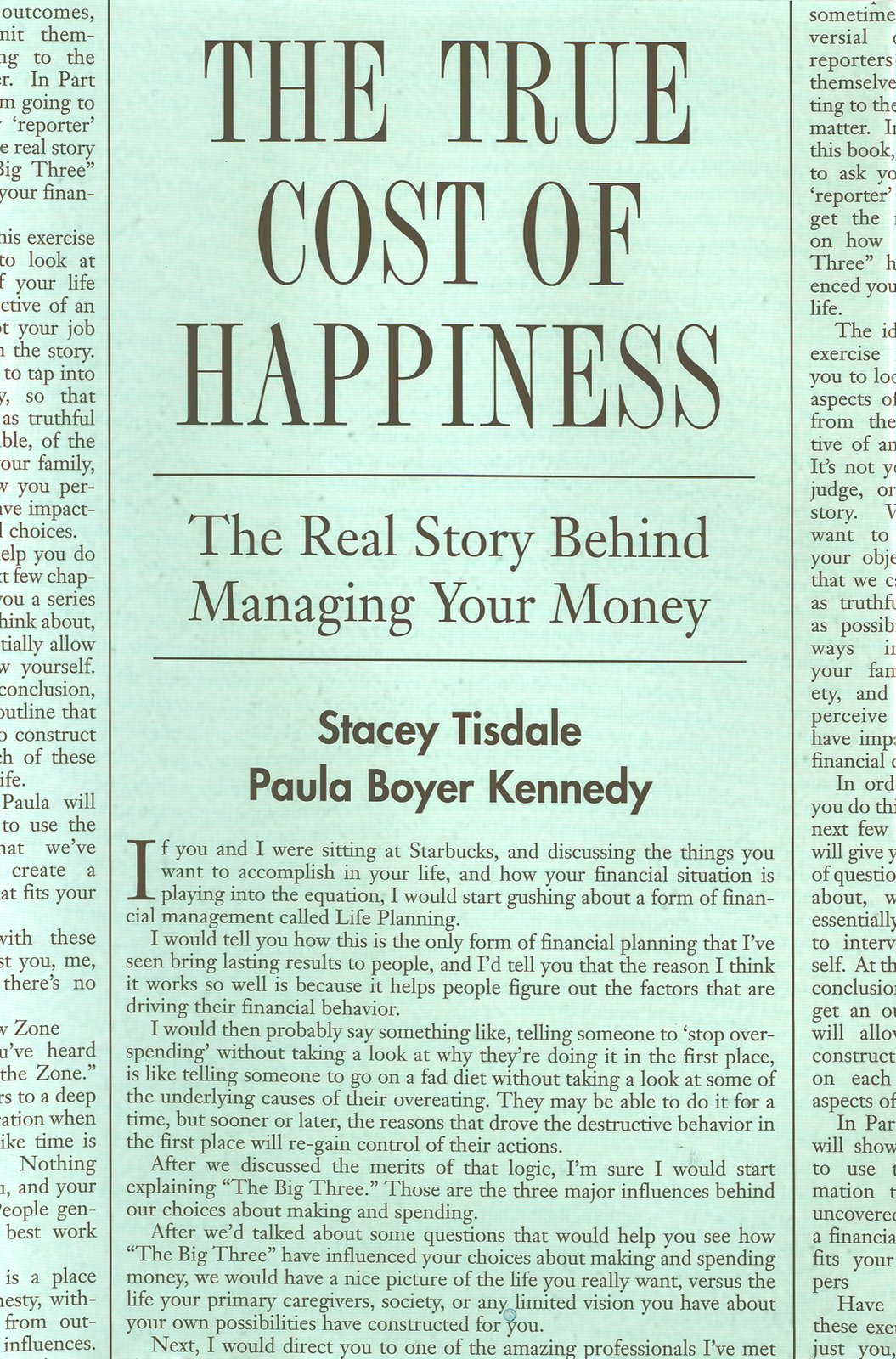
Reviewed: “The True Cost of Happiness,” by Stacey Tisdale and Paula Boyer Kennedy, Wiley, 2007, $24.95, 288 pages.


How your parents handled money influences the way you handle your finances, according to “The True Cost of Happiness,” a book co-authored by business journalist Stacey Tisdale and financial planner Paula Boyer Kennedy.


Readers are encouraged to take a look at the role family dynamics play in their financial behavior.“I’m talking about the ways in which the first lessons we learned about money as children affect our decision about making and spending it as adults,” writes Tisdale, who penned the first half of the book, which focuses on self-awareness.


In my family, my father managed the money. My mom took care of the house and three kids. The bills and the bank account were the man’s job. When my father died at age 58, losing a 13-year battle with cancer, my mother was thrust into a position of total financial responsibility — a role no one had prepared her for. When my mom was growing up, her father took care of the household finances. She learned at an early age that money was the man’s job. And that was the norm of the time, and it worked out OK for my mom. Until circumstances in her adult life necessitated a crash-course in paying bills.


Learned financial behaviors are what Tisdale and Boyer Kennedy call “money scripts.” Leaving room for you to write down your thoughts, they ask you to explore your own “money scripts” learned in childhood, and look at how they play a part in your financial attitudes as an adult.“Think about those money scripts that are limiting you. Imagine your life without those messages. How would your actions be different?” the authors write.


If your behavior isn’t leading you to your financial goals, then you need to take a new tack, they say. They walk you through ways to make those changes. One fun exercise, that I’m sure each of us has indulged in some variation, is:

•Imagine that you have all the money you will ever need. Decide what you would do with it, your life and your time.

•Next, change that picture. Now you only have 5 to 10 years to live. How will you change your life? What will you do with the time you have left?

•Lastly, imagine the changes you’ll wish you had made if you only have 24 hours to live.“The question is not what you would do with the time you have left, but what are your regrets?” the authors ask. That last scenario, they say, “cuts deepest of all. It becomes clear which issues in life are superficial and which are central. Sometimes this exercise delivers a … longing or wish that has never before surfaced.” It’s a thought-provoking way of getting to your big picture goals.


For instance, I have a desire to travel, but I feel like with my current monthly bills (mortgage!) I don’t have enough money to go anywhere. Per the authors’ advice, I can afford a trip to, say, Italy, if I make a budget and start setting aside a small sum every month.


Those who dislike the “getting in touch with your financial feelings” part of the book may be more comfortable with the second half of the book, which focuses on numbers. Basically, it tells you how to make a budget — something a lot of people simply don’t do. “We think having to literally face your values and your barriers each time you look at your finances will be an important factor in keeping your financial decisions aligned with your priorities,“ writes Boyer Kennedy, who handles the numbers-focused latter half of the book.


In other words, make a budget and stick to it and you may be able to save some money for a trip abroad … or retirement!


While the authors offer some very sound, practical advice, they also suggest that readers visit a financial planning professional to help you figure it all out.“The True Cost of Happiness” helps readers to determine why they spend/save as they do and what they could do better to meet certain goals.


Michelle Karas is The Mercury’s business editor.

Tuesday, March 11, 2008

Book’s tips show how a hello and a handshake can further your career


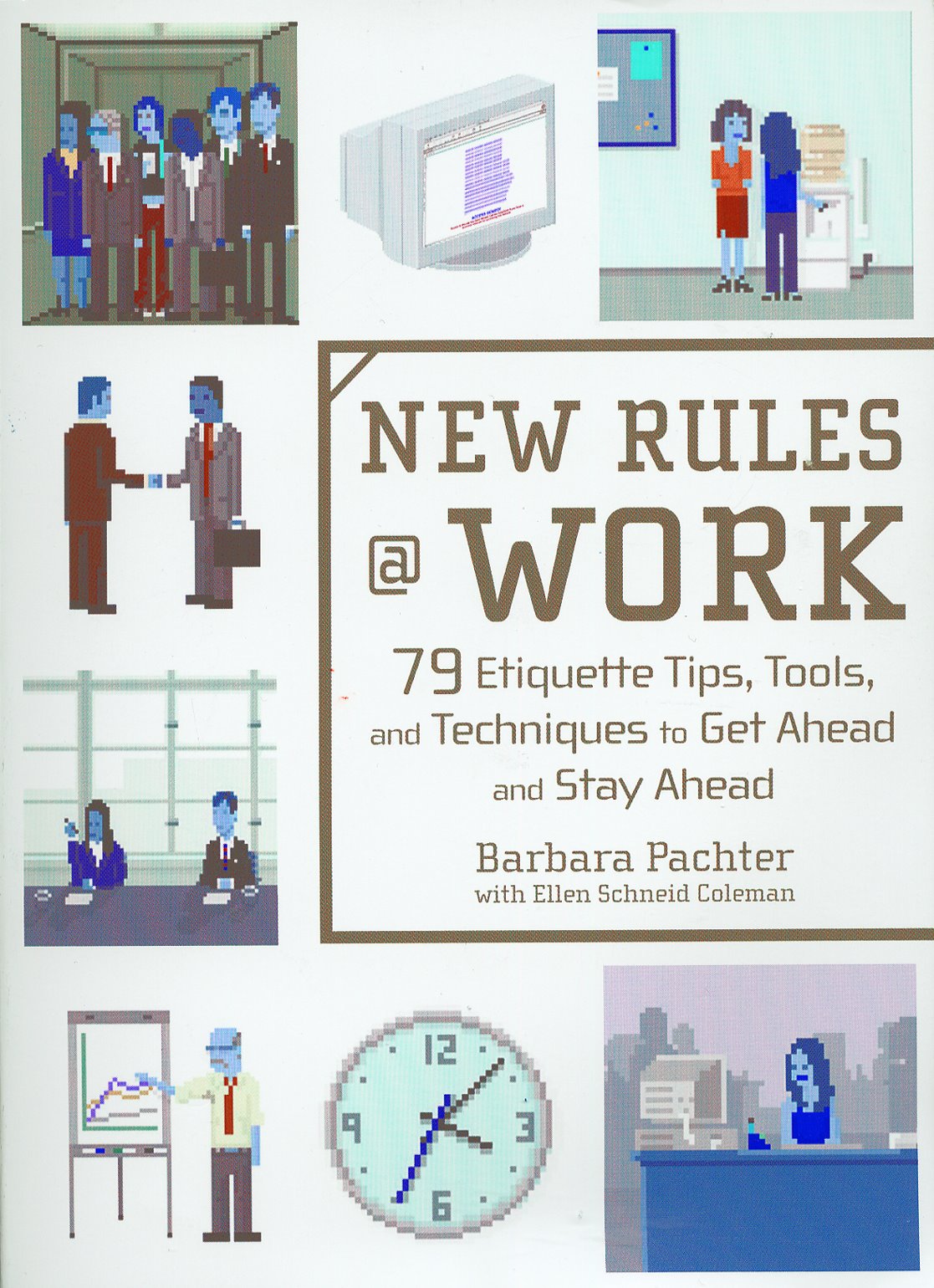
Reviewed: “New Rules @ Work: 79 Etiquette Tips, Tools and Techniques to Get Ahead and Stay Ahead,” by Barbara Pachter with Ellen Schneid Coleman, Prentice Hall Press, 2006, $13.95, paperback, 258 pages.

Author Barbara Pachter says it’s a good strategy, at a business event where alcohol is served, to order a drink you don’t much like and slowly sip it to make sure you don’t overindulge.
I (sort of) put this theory to the test at a recent after-hours networking event, when the bar had run out of the red wine or beer I would have preferred, and I had to drink (gasp!) light beer. But I don’t think that was exactly what Pachter was getting at. When the drinks are free, I’m not all that picky.
Pachter, author of numerous business books including “New Rules @ Work: 79 Etiquette Tips, Tool, and Techniques to Get Ahead and Stay Ahead,” states that when drinking alcohol in social/business situations, “Have a good time but…don’t forget your behavior always matters. Just because you are out of the office doesn’t mean that your behavior doesn’t count.
“Many workplaces don’t have a lot of rules — or may not enforce a lot of rules — when it comes to etiquette, or prescribed conduct, in or out of the office. “New Rules @ Work,” is practical and helpful in filling in the blanks.
Take the case of professional attire:Years ago, I was a contractor at a mutual funds company. Proper professional attire that included suits with conservative skirt lengths and certain types of shoes (no open toes, sneakers or clogs) worn with “proper hosiery” was required.
A lot of companies, however, opt for a “business casual” dress code. And in the heat and humidity of summer, those already casual rules may become even more relaxed, according to Pachter.
However, the author states, warmer weather doesn’t mean you can suddenly wear tiny skirts, skimpy tops or otherwise inappropriate clothing to your job.
“Sexy is not a corporate look,” warns Pachter.
She suggests, “If your company does not have a written policy, look at what other people wear, especially the more senior people, the more successful ones. They are often good role models.”
There’s also a chapter devoted to “e-mail embarrassments.”
“Of course, it is inappropriate to say negative things to coworkers about colleagues — past or present — whatever technology you are using. However, the risks multiply when you use e-mail,” Pachter writes.
Many of us have been on the receiving end of an inappropriate e-mail that was erroneously sent to “reply all” instead of just to the sender. Pachter advises avoiding potentially embarrassing e-mail situations by beginning a fresh e-mail rather than replying in the heat of the moment.
A chapter I found particularly helpful discussed handshakes.“You should be certain to shake hands when you: Greet someone with more than just a hello and when you say goodbye; are introduced to someone; are visited in your office by someone from outside the company — for example, a customer, client or vendor; encounter a business colleague outside the office; or feel it is appropriate.”
There are times when I first meet someone in a professional capacity and that person does not extend their hand for a handshake. It’s sometimes awkward and feels like a rejection. What I learned from Pachter’s book is that I, as a woman, should not hesitate to extend my hand first — something that I realized that I do sometimes hesitate to do.
The proper etiquette is that “a man should wait for a woman to extend her hand.” Also: “The higher-ranking person should extend his or her hand first.”
Another chapter I found interesting discussed saying hello to people at work. It sounds simple enough — greeting those you see every day or even returning a hello — but not everybody does it, according to Pachter.
“You would not believe how many people tell me they are frequently ignored when they say hello to colleagues they encounter in hallways, elevators, cafeterias and elsewhere in the office,” she writes.
Her guideline: “If you make eye contact with someone who is within 10 feet of you, you must acknowledge the person with a nod or a smile. At five feet you must say something: ‘Hello,’ or ‘Good morning’ will suffice.”
Even a simple greeting can make your boss, coworker or client feel a connection. Like Pachter’s other tips, this one might just help you “get ahead and stay ahead.”

Monday, February 4, 2008

‘12-step program’ pragmatic way to assess your career


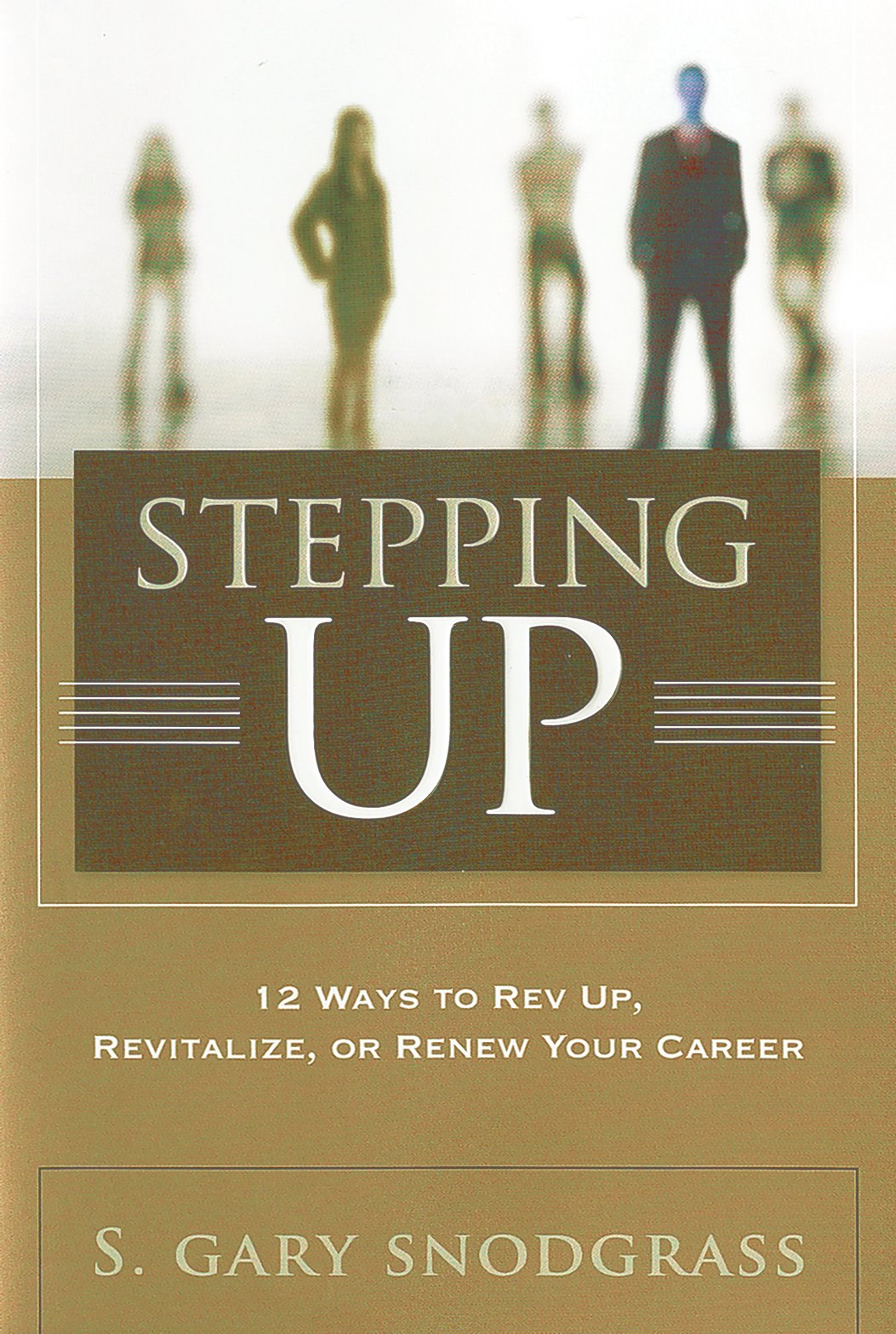
Reviewed: “Stepping Up: 12 Ways to Rev Up, Revitalize, or Renew Your Career,” by S. Gary Snodgrass, Greenleaf Book Group Press, 2007, 87 pages, $13.95

When I have a big decision to make, I consult my personal short list of advisers: My mom, my sister and my best friend. The list widens the bigger the decision is, but those are my “Top 3.”
In career matters, however, sometimes what you really need is more objective advice. That’s where sources like “Stepping Up: 12 Ways to Rev Up, Revitalize, or Renew Your Career,” by S. Gary Snodgrass, come in.
This 87-page book, written by a human resources professional with 35 years of experience, offers a pragmatic approach to career moves.
Snodgrass’ resume includes 10 years as chief human resources officer for Chicago-based Exelon Corp., parent company of Exelon Nuclear, operator of the Limerick Generating Station in our own backyard. At Exelon, one of the nation’s largest energy companies with a work force of roughly 17,000, he led the corporation’s human resources, diversity, labor and employee relations and security functions. He is also the author of a previous book, “When Your Career Means Business.”
By its title alone, “Stepping Up: 12 Ways to Rev Up, Revitalize, or Renew Your Career,“ seemed like it might be an interesting and quick little read. And who doesn’t want to “rev up” their career?
I was a little taken aback, however, when I visited the author’s Web site (www.sgarysnodgrass.com), to find that he titles himself “Thought Leader and Consultant.”
Thought leader? I’m going to let that one pass.
The suggestions offered by Snodgrass could apply to those in their first “real job” as well as seasoned professionals.
“If you are searching for a new position or career, you should pursue an environment where the best employees are recognized and valued. It should be an organization that provides career growth, lifelong learning, and development opportunities. You also want meaningful work, an opportunity to contribute, and an environment that prizes new ideas and fresh perspectives,” Snodgrass writes.
He claims these types of organizations “abound.” (Well, perhaps they’re out there, anyhow.)
Snodgrass proposes taking control of your career path rather than simply going with the flow and letting it happen.
For example, in Guideline 5 — Evaluate Your Career Turning Points, Snodgrass states while a turning point can be something dramatic, such as marriage or a promotion, sometimes it will be “less obvious.”
“You may be disenchanted, or know in your gut that you’re not having fun any longer in your current position, place of employment, or even career field,” he writes.
Those are instances we should view “as a valuable opportunity for recharting the course” of our professional and personal lives, Snodgrass says.
And turning points, according to Snodgrass, are events we should embrace.
“If a turning point doesn’t come along, schedule one, and then reevaluate to determine your next step. For example, choose a memorable date such as your birthday or the anniversary of your employment to evaluate your work situation,” he writes.
In one of the book’s illustrative case studies, Snodgrass spotlights how John Mackey, founder and CEO of Whole Foods, knew he would have to compromise his once small vegetarian business and sell animal products in order to grow. Mackey decided to introduce humane animal-treatment standards and also placed a cap on executive compensation. His willingness to change his mindset ultimately helped to make “organic” a household word.
Each chapter has a similar nugget of wisdom for you to apply to your own work situation, with the goal of allowing you to “evolve to your highest level” at work as well as finding the organization that’s going to help take you there.

Friday, January 25, 2008

Buying this book won't solve your debt issues


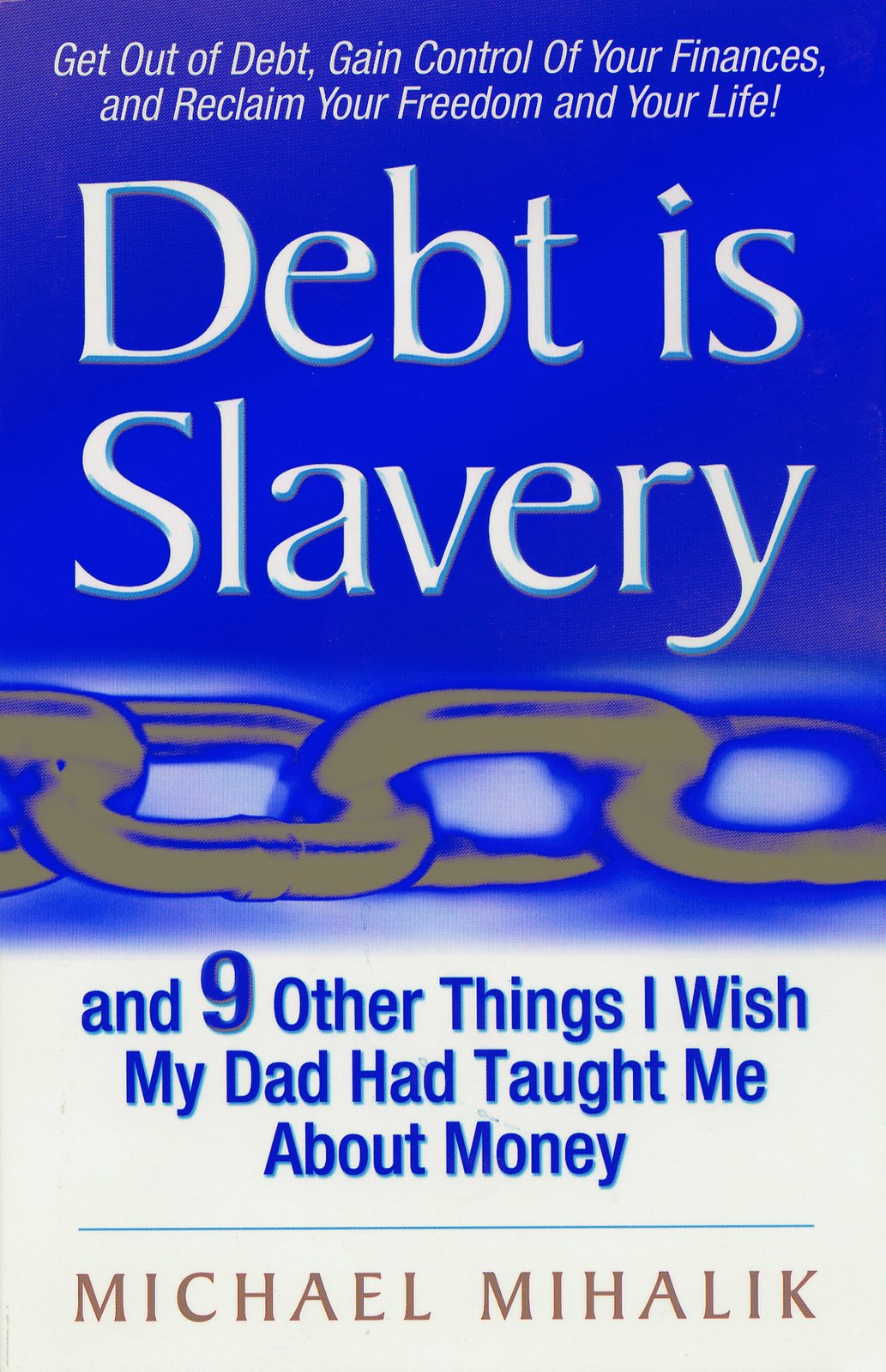
Reviewed: “Debt is Slavery: and 9 Other Things I Wish My Dad Had Taught Me About Money,” by Michael Mihalik, October Mist Publishing, 2007, $14.95, 128 pages.

Michael Mihalik was inspired to write this little book because of his own struggles with debt after college.
Mihalik, an aerospace engineer when not penning books, proudly mentions several times throughout “Debt is Slavery” that he has overcome his early credit card debt and is so financially savvy now he was able to take six whole weeks off in order to write his book. Six whole weeks.
This is where I think to myself that I or pretty much anyone who can put pen to paper might be able to come up with 128 pages on any topic if given a month and a half.
When it comes down to it, I don’t think Mihalik’s experience overcoming his debt is anything remarkable. He overextended himself with credit cards while in college and it took a while for him to bail himself out. Well done, Mr. Mihalik, but I also learned that “easy credit” lesson the hard way. So did a few others I know.
While sound, Mihalik’s pointers to overcome your debt are far too general, to the tune of: Don’t buy things you don’t need. Um, OK.
“I came up with 10 basic ideas and rules about money that allowed me to gain control of my finances and pay off my debt,” Mihalik states. “They literally transformed my life.”
Mihalik was 13 when his father died, and the premise of the book is that Mihalik had to come up with his own rules for money because his dad never had the chance to teach him.
“That’s not the easiest way to learn. I wish someone had just taught me the rules, but fate had other plans for me,” he writes. “If you’re drowning in debt, if it seems like you’ll never get ahead financially, or if you’re forced to work at a job you dislike to pay the bills, this book has something for you.”
Something, yes. Something in the way of very general advice.
(Specific financial advice, let it be noted, should come from a financial services professional).
The author says that when he got out of college, armed with his engineering degree and several pre-approved credit cards, he soon found himself in roughly $20,000 of debt and living beyond his means. At the time, Mihalik said he searched for a self-help book but could find none that were short and to the point. There, his idea for this book was born.
“After I eliminated my debt and gained control of my finances, I wanted to help other people do the same, so I decided to write the book I wish had been available to me,” he writes.
It took Mihalik one “hellish year” to get out of debt, he says.
The core lessons of the book are sound: Debt is bad. Try not to get into it. Possessions won’t bring you happiness, so stop buying them. Find work you enjoy, and you’ll be happier. Don’t just save, invest in “income-producing assets.” Spend less than you earn.
Are these suggestions bad advice? Not at all. Did I need to read this book to learn them? Not at all.
The one piece of advice that piqued my interest was the chapter — I mean the three whole pages — on how to save 50 percent of your salary.
“If you save 50 percent of your salary, for every month you work, you will save enough to take a month off — without changing your lifestyle,” Mihalik writes.
Hmmm. Saving half my salary. I don’t think that’s even possible.
But Mihalik anticipates this reaction, and advises trying for a 33 or 25 percent total savings — over and above the maximum 401k plan contributions you can make at work, that is.
To save this quarter of your salary, you have to make a budget, he says.
I agree — making a budget is a great idea for anyone who has any debt at all. It helps you see where your money goes.
Additionally, Mihalik advises, you should budget for savings, trips and special purchases. Yes, all good ideas, but still super-simplified and general.
My advice is to save the money you would spend on this book and add it to your savings.

'Miserable' doesn't describe this book


Reviewed: “The Three Signs of a Miserable Job: A Fable for Managers (and their employees),” by Patrick Lencioni, Jossey-Bass, an imprint of Wiley, 2007, $24.95

When I received a review copy of “The Three Signs of a Miserable Job” at my office, I was intrigued enough by the title to take it home with me and let it set up shop on my nightstand. That night, as I flipped through and saw that it was written as a fable rather than in a stodgy, “business-y” kind of way, I started reading.
I was quite surprised, a couple of bleary-eyed hours later, to find that I had torn through half of the 272-page book in one night. Yes, that’s right, I tore through a business book.
Because author and business consultant Patrick Lencioni wrote the book as a fable (a story about a regular guy and his career), it’s easy for anyone to read and understand (you don’t need to be an executive or have an MBA). Anyone who’s been a manager or who has been managed, or mismanaged as the case may be, will enjoy the tale of the fictional character Brian Bailey’s career.
Owner of a management consulting business and author of New York Times bestseller “The Five Dysfunctions of a Team,” Lencioni relates the tale of the likable self-made Bailey, who goes from CEO of a fitness company to manager of a pizza shop in a matter of months. He finds that his theory of management, that managers can make a difference in how employees feel about their work, applies at both corporate and the small business levels.
A miserable job, according to Lencioni, differs from a bad job, which is in the “eye of the beholder,” because it’s “one that makes a person cynical and frustrated and demoralized when they go home at night. It drains them of their energy, their enthusiasm and their self-esteem. Miserable jobs can be found in every industry and at every level.”
In fact, studies have shown job dissatisfaction rates as high as 77 percent. Perhaps that’s part of the reason why Lencioni’s book quickly made the New York Times, Wall Street Journal, and BusinessWeek bestseller lists after being released in August 2007.
“Even employees who are well paid, do interesting work and have great autonomy cannot feel fulfilled in a job if their managers are not providing them with what they need on a daily or weekly basis,” he said.
Lencioni’s “three signs” of a miserable job — irrelevance, immeasurement and anonymity — aren’t in themselves compelling, but illustrated with examples over the course of one man’s career, they come alive. Anonymity, he says, is the feeling an employee has when they discover their manager doesn’t relate to them as a human being and has no interest in knowing them on other levels. Irrelevance, according to Lencioni, is avoided by taking the time to help people understand that their jobs matter to someone. Immeasurement, Lencioni said, is when employees don’t know how to gauge their progress in their daily tasks.
“Basically, a job is bound to be miserable if it doesn’t involve measurement,” Lencioni writes. “I’m not talking about feedback from a person, like an attaboy or attagirl. That’s something else. I’m talking about objective evidence that tells you you’re doing something right. Even supposedly exciting jobs get old when you’re doing something right.”
This book is interesting and thought-provoking — it makes you think about your own work situation, be it good or bad. It makes you think about how the way you’re managed affects the way you feel fulfilled — or unfulfilled — by what you do.
If you are a manager, the book might make you think about what you can do to motivate your employees, and to ultimately help your business.
“Most people really do want to be good managers,” Lencioni states. “By helping people find fulfillment in their work, and helping them succeed in whatever they’re doing, a manager can have a profound impact on the emotional, financial, physical and spiritual health of workers and their families.”
If anything, the book encourages you to take a look at your relationships at work. It brings to mind past relationships with bosses or employees that didn’t quite work, and offers a stab at why that was. This quick read is relevant to anyone who works, be that a cashier in a retail store or a corporate bigshot.